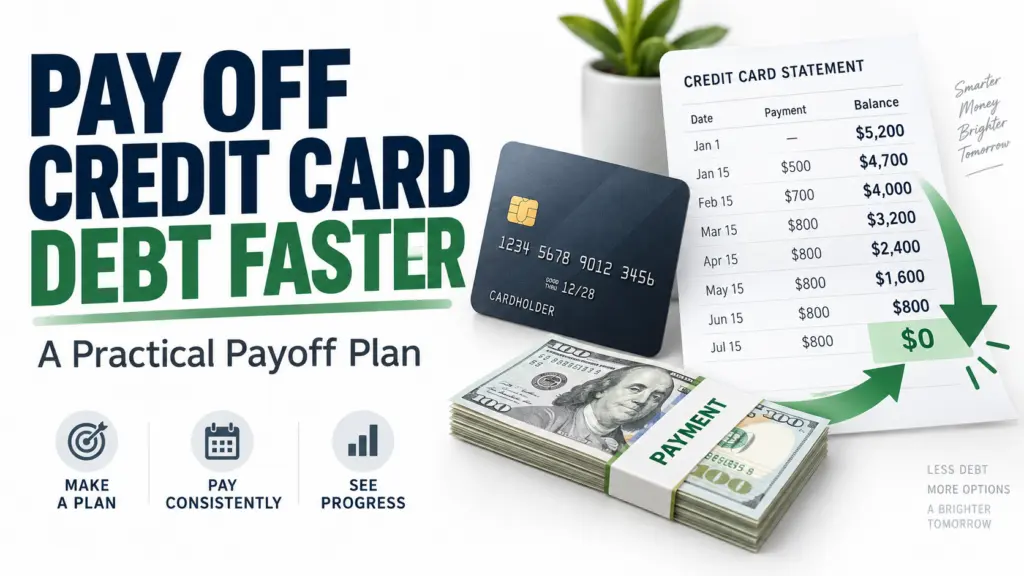
Credit card debt feels stubborn because interest keeps working while minimum payments can make balances fall slowly. The fastest sustainable route is usually straightforward: stop adding new revolving debt, protect every minimum payment, direct extra cash to one target balance, and lower the interest rate when the numbers justify it.
If you already cannot make minimum payments, contact the card issuer promptly and ask about hardship or repayment options. The Consumer Financial Protection Bureau (CFPB) recommends acting quickly and says card companies may be willing to work with borrowers facing financial difficulty. Nonprofit credit counseling can also help when the problem involves several debts.
Important: Card terms, promotional offers and hardship options vary by issuer and borrower.
Start With the Four Numbers That Matter
For each card, record the balance, APR, minimum payment, and due date. Also note when any promotional APR ends.
U.S. credit card statements must show how long payoff could take if you make only minimum payments and no new purchases, plus an estimate of the monthly amount needed to pay the current balance in 36 months. Use that disclosure as a reality check, then decide how much extra you can reliably pay each month.
1. Stop Adding New Debt
A payoff plan cannot gain traction if the balance keeps rising. Move routine spending to cash or debit when practical, remove saved card details from shopping sites, and pause nonessential charges on cards you are paying down.
You do not automatically need to close paid-off accounts. Closing a card can reduce available credit and raise your credit-utilization ratio, although it may still make sense if the account encourages overspending or charges an annual fee.
2. Automate Every Minimum Payment
Make at least the minimum on every card by the due date. Late or missed payments can mean fees, credit damage, and potentially worse card terms.
Set autopay for the minimum as a safety net, then make a separate extra payment toward your target card. Keep enough cash in the linked account to avoid a returned payment.
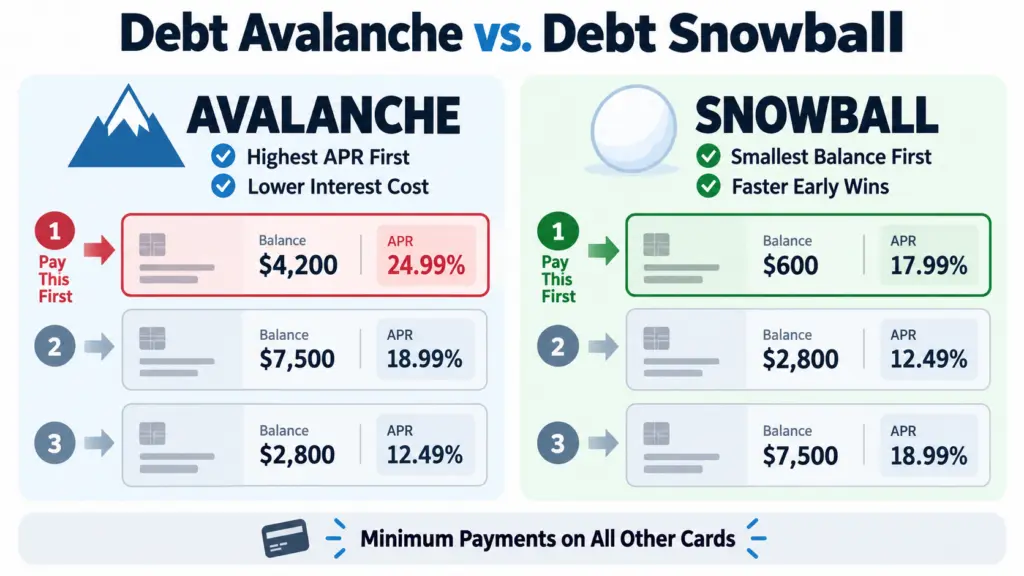
3. Choose Avalanche or Snowball
| Method | Target First | Best For | Trade-Off |
|---|---|---|---|
| Debt avalanche | Highest APR | Minimizing interest | Progress may feel slower |
| Debt snowball | Smallest balance | Motivation and quick wins | May cost more interest |
The CFPB describes both approaches and notes that targeting the highest-interest debt generally reduces the costliest balances first, while snowball provides faster visible wins.
With either method, keep paying minimums on the other cards. Once one balance reaches zero, roll that payment into the next balance.
Example: Suppose you owe $4,000 at 29% APR and $2,000 at 18% APR and can pay $500 a month total. In a simplified illustration using a $50 minimum on the non-target card and monthly interest, avalanche saves about $190 versus paying the smaller balance first. Actual results vary because card interest and minimum-payment formulas differ.
Check This Also: How to Build an Emergency Fund From Scratch | U.S. Guide
4. Pay Extra as Soon as Practical
Many issuers calculate credit card interest daily. If you are carrying a balance, reducing it earlier can reduce later interest.
A simple approach is to send planned extra payments on payday instead of waiting until the due date. Keep minimum-payment autopay active unless you know the earlier payment satisfies the required minimum.
5. Call the Issuer Before Shopping for a New Loan
Ask whether your issuer can lower the APR, waive a fee, move the due date, or offer a hardship arrangement. If you cannot afford the minimum, explain what you can pay and when you expect your finances to stabilize.
The CFPB notes that some creditors may agree to lower payments, reduce interest, waive certain fees or change due dates.
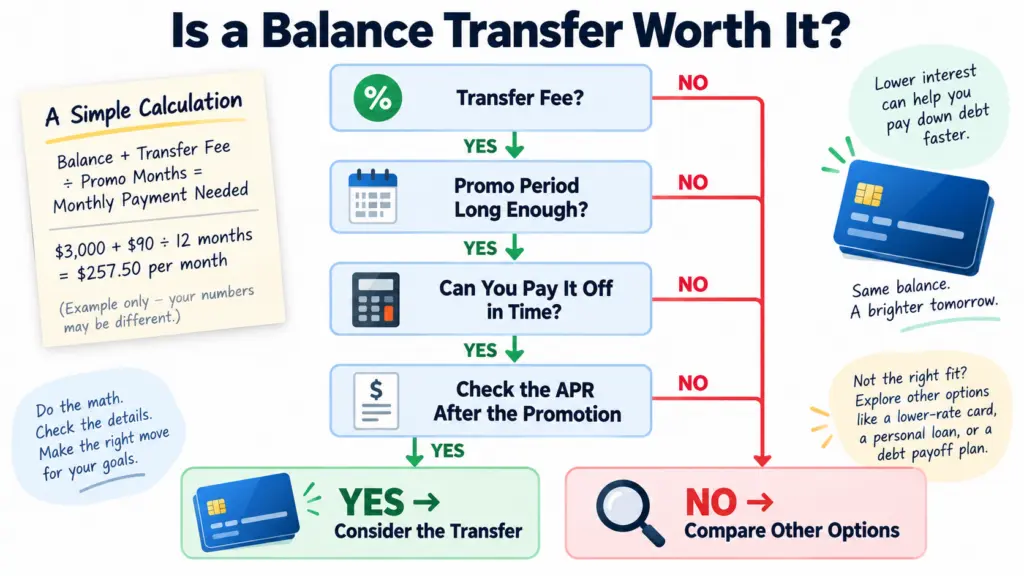
6. Use a 0% Balance Transfer Only When the Math Works
A balance transfer can help if you qualify for a low promotional APR and can repay the balance during the promotional period. But a 0% offer can still charge a transfer fee, and the promotional rate is temporary.
Calculate the balance plus fee, divide it by the promotional months, and ask whether that monthly payment fits your budget. Also check the post-promotion APR and the rate on new purchases.
7. Compare Consolidation by Total Cost
A lower-rate personal loan can simplify several cards, but a smaller monthly payment is not automatically cheaper. Compare APR, fees, repayment term, and total dollars repaid.
Consolidation also fails if newly available card limits become new spending. The goal is to replace expensive debt, not create room for more of it. The CFPB likewise cautions that consolidation alone may not solve the problem when spending continues to exceed income.
8. Get Nonprofit Credit Counseling if Minimums Are Unmanageable
A reputable nonprofit credit counselor can review your budget and may suggest a debt management plan. You typically make one payment to the counseling organization, which pays participating creditors; creditors may agree to lower interest or certain fees.
Debt management is different from debt settlement. Be cautious with companies that guarantee they can erase debt, demand prohibited upfront settlement fees, or tell you to stop paying creditors. Both the FTC and CFPB identify these behaviors as warning signs.
Common Mistakes That Slow Down Payoff
Avoid paying only the minimum when you can safely pay more, continuing to spend on cards carrying debt, choosing a balance transfer without counting its fee, or taking a consolidation loan based only on the monthly payment.
Also avoid draining cash to zero. A modest emergency buffer can keep the next unexpected expense from going straight back onto a card.
Key Takeaways
- Protect every minimum payment first.
- Avalanche usually saves more interest; snowball can make progress easier to sustain.
- Earlier extra payments may reduce interest when interest accrues daily.
- Ask the issuer about lower-cost options before paying a third party.
- Evaluate transfers and consolidation by total cost.
- If minimums are unaffordable, seek reputable help early.
Frequently Asked Questions
Is it better to pay off one credit card at a time?
Usually. Make minimum payments on every card, then concentrate extra cash on one target. Choose the highest APR for avalanche or the smallest balance for snowball.
Should I use savings to pay off credit card debt?
Using savings above the emergency cushion you genuinely need can make sense when card interest is high. Avoid reducing cash to zero if that would force you to borrow again for routine emergencies.
Does paying off credit card debt improve my credit score?
It can help because lower balances may reduce credit utilization, but no score increase is guaranteed. Payment history and other factors also matter. You do not need to carry a balance or pay interest to build credit.
Is a balance transfer better than the debt avalanche?
They can work together. A transfer may lower the APR; avalanche determines where extra payments go. Use a transfer only when its fee, promotional period, payoff pace, and post-promotion rate make sense.
What if I cannot make the minimum payment?
Contact the issuer immediately, explain what you can afford, and ask about hardship options. If several debts are affected, consider a reputable nonprofit credit counselor.
Should I close a card after paying it off?
Not automatically. Closing can reduce available credit and raise utilization, but it may be sensible if the card charges an annual fee or keeping it open makes overspending more likely.
Final Thoughts
A fast payoff plan is useful only if it does not create a new debt problem. Start with your statements, automate minimums, choose one target balance, and direct sustainable extra cash toward it. If the numbers still do not work, focus on lowering the rate, restructuring payments, or getting reputable counseling.