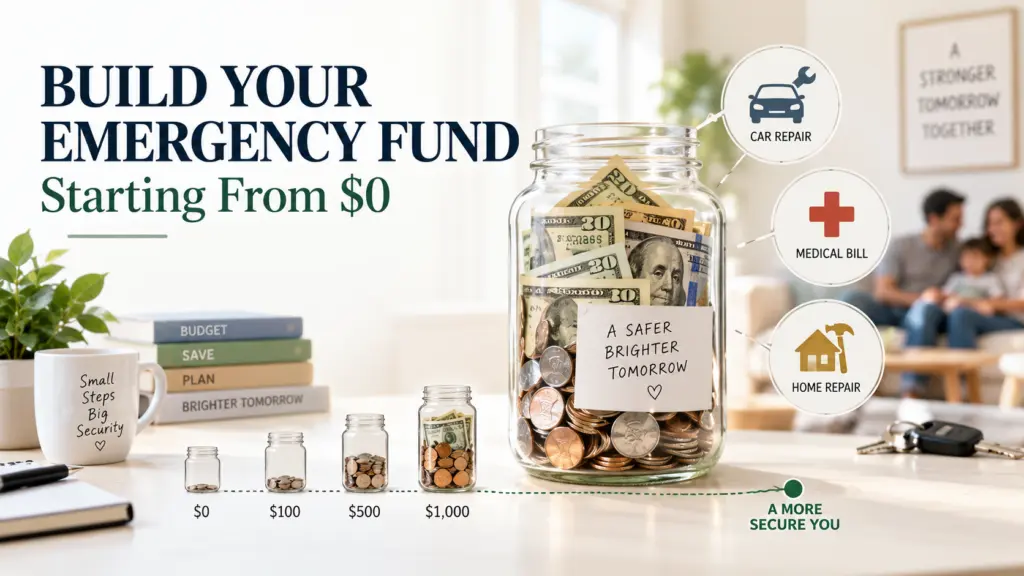
An emergency fund is money reserved for problems you did not plan for: a major car repair, an urgent medical bill, a broken appliance, or a sudden loss of income. If you are starting with $0, saving several months of expenses can sound unrealistic. The better approach is to build the fund in stages.
That matters because financial shocks are common. Federal Reserve data for 2025 found that 63% of U.S. adults could cover a $400 emergency using cash or its equivalent, while 55% said they had rainy-day savings covering three months of expenses. You do not need to reach the final target before your savings become useful.
What an Emergency Fund Is — and What It Is Not
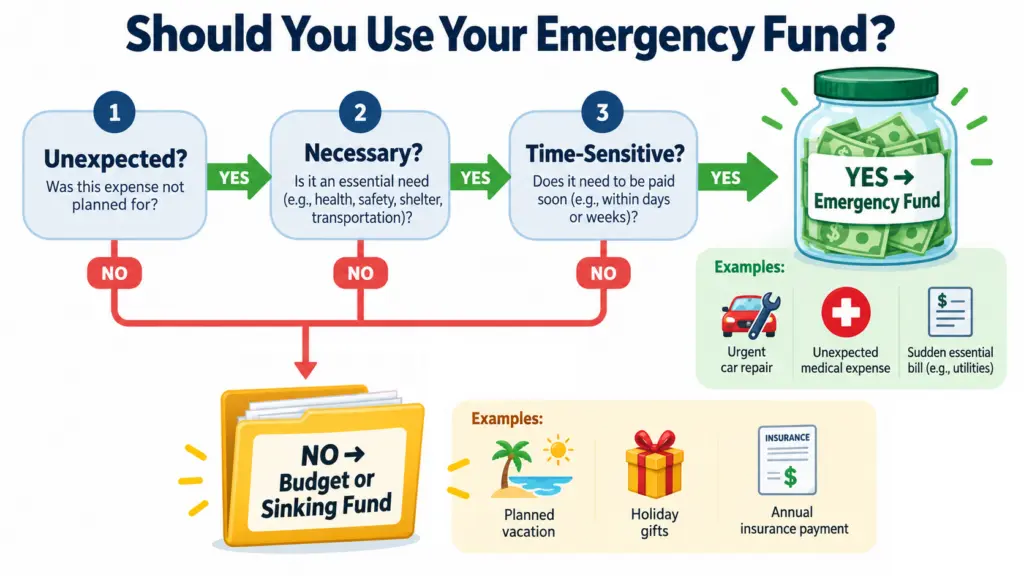
An emergency fund is a dedicated cash reserve for genuinely unplanned, necessary expenses. It is different from money for predictable costs such as holiday gifts, annual insurance premiums, vacations, or a planned car purchase.
A useful test is: Is the expense unexpected, necessary, and time-sensitive? A failed transmission may qualify. A discounted vacation usually does not. Planned irregular expenses are better handled through separate “sinking funds.”
Check This Also: How to Pay Off Credit Card Debt Faster Without Wrecking Your Budget
How Much Should You Save?
There is no single target for every household. The Consumer Financial Protection Bureau says the appropriate amount depends on your circumstances and the kinds of unexpected expenses you may face. U.S. financial guidance commonly uses roughly three to six months of living expenses as a longer-term benchmark, although the right target can be higher for households with unstable income or greater financial risk.
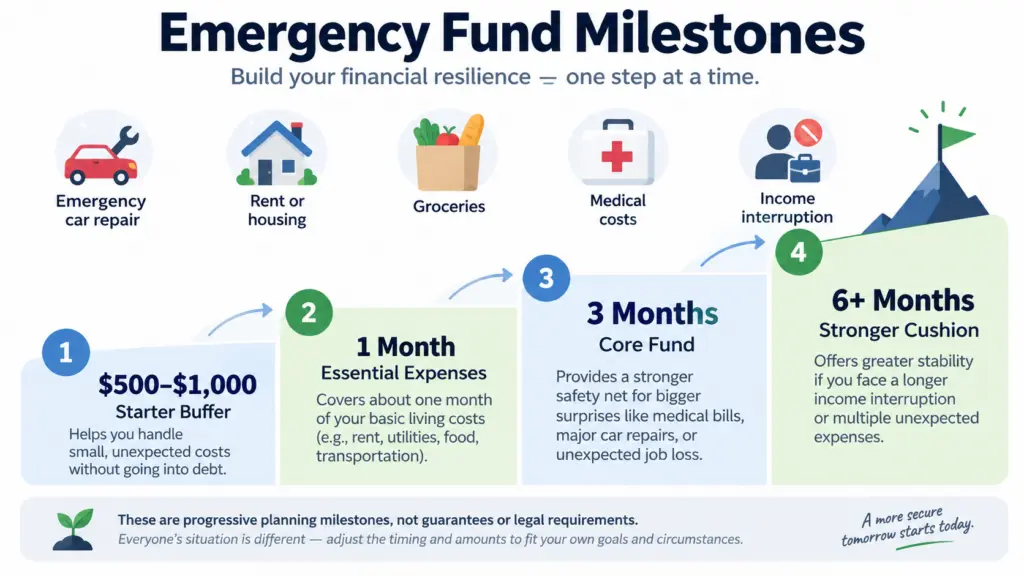
For a beginner, use milestones:
| Stage | Goal | Purpose |
|---|---|---|
| Starter buffer | $500–$1,000 | Small repairs, copays, urgent travel |
| One-month reserve | 1 month of essentials | Short income interruption |
| Core fund | 3 months of essentials | Larger income shock |
| Stronger cushion | 6 months or more | Variable income, dependents, higher risk |
These are planning milestones, not financial requirements.
Add the expenses you would still need during an emergency: housing, basic utilities, groceries, insurance, minimum debt payments, transportation, medication, childcare, and other essentials.
Example: If essential expenses are $3,200 per month, three months equals about $9,600, while six months equals about $19,200.
How to Build an Emergency Fund From Scratch
1. Pick a Small First Target
Start with $500 or $1,000 instead of focusing immediately on six months of expenses. Saving $25 a week would add up to about $1,300 over 52 weeks before interest.
The exact starting number matters less than creating a buffer that prevents every small surprise from becoming new debt.
2. Find an Amount You Can Repeat
Review two or three months of checking and credit-card activity. Identify what you can save without missing bills, creating an overdraft, or immediately transferring the money back.
Look for practical room: an unused subscription, a discretionary category, a raise, or a bill whose due date can be adjusted. Consistency matters more than creating a perfect budget.
3. Automate Savings
Recurring transfers can remove the need to make a new decision every payday. The CFPB recommends automatic transfers or split direct deposit where available, while cautioning that transfers should be timed so they do not cause overdrafts.
A simple approach is to transfer money shortly after payday. If your income varies, automate a smaller base amount and add more during stronger months.
4. Use Windfalls Strategically
Tax refunds, bonuses, cash gifts, rebates, or side-gig income can accelerate the fund. You do not have to save all of a windfall; choosing a percentage in advance can make the decision easier.
For example, you might decide that half of unexpected cash goes to your emergency fund until you reach your next milestone.
5. Increase the Goal in Stages
After the starter buffer, work toward one month of essential expenses, then three months. If your income is irregular, you support dependents, or finding replacement work could take longer, consider moving toward six months or more.
This makes the goal useful early instead of turning it into one distant number.
Where Should You Keep the Money?
An emergency fund should be safe, liquid, and accessible without being mixed into everyday spending.
For many Americans, a separate savings account at an FDIC-insured bank or federally insured credit union is practical. The FDIC generally insures eligible deposits up to $250,000 per depositor, per insured bank, for each ownership category. Federally insured credit unions provide NCUA share insurance under applicable coverage rules.
A competitive savings account can earn interest, but accessibility matters more than maximizing return. Avoid putting your core emergency fund in stocks, crypto, or other volatile assets. CDs can also be less suitable if accessing the money early involves penalties.
Important: A bank money market deposit account can qualify as an insured deposit product. A money market mutual fund is an investment and is not FDIC-insured.
What If You Also Have Credit-Card Debt?
You do not always have to choose between emergency savings and debt repayment.
One practical sequence is to build a small starter buffer, make required debt payments, then direct more available cash toward high-interest balances. Once those balances are under better control, increase emergency savings again.
The right mix depends on your interest rates, income stability, and cash flow. The purpose of the starter fund is to reduce the chance that the next small emergency goes straight back onto a credit card.
Common Mistakes to Avoid
Do not keep the fund mixed with everyday checking if that makes it easy to spend. Do not invest money you may need on short notice. And base your longer-term target on essential expenses rather than gross salary.
Another mistake is refusing to use the fund when a genuine emergency happens. The money exists for that purpose. If you spend it, rebuild it afterward.
Key Takeaways
- Start with a reachable buffer, then increase it in stages.
- Base your target on essential monthly expenses.
- Automate contributions when your cash flow allows.
- Keep the core fund safe, liquid, and appropriately insured.
- Adjust the three-to-six-month goal for income stability and household risk.
Frequently Asked Questions
Is $1,000 enough for an emergency fund?
It can be a useful starter target for many households, but it may not cover a longer income loss. Treat $1,000 as an early milestone rather than a universal final target, then continue toward one or more months of essential expenses.
Should I keep my emergency fund in checking or savings?
A separate savings account is often more practical because it separates emergency money from daily spending while keeping it accessible. Verify the bank or credit union’s insurance status and understand any account restrictions or fees.
Should I invest my emergency fund?
Usually, the core emergency fund should prioritize safety and liquidity. Investments such as stocks can fall in value at exactly the time you need the cash, making them less suitable for money intended to cover immediate emergencies.
What counts as an emergency?
Typical examples include urgent car or home repairs, necessary medical costs, essential family travel, or sudden income loss. Predictable bills and optional purchases generally belong in your normal budget or separate savings.
Should I save while paying off debt?
A small emergency buffer can reduce the need to borrow again when something unexpected happens. After establishing that buffer, how aggressively you divide extra money between savings and high-interest debt depends on your debt costs, cash flow, and financial risks.
Final Thoughts
If you are starting at zero, focus on the first milestone rather than the final number. Open a separate, safe savings account, automate an amount you can sustain, and raise the target over time. Your emergency fund becomes useful long before it is fully built.